ADI Part 3 Waiting Times: PDIs Struggling With the 2-Year Qualification Limit
The Real Crisis for PDIs: The 2-Year Clock vs. Impossible Part 3 Waiting Times
There is a serious issue facing Potential Driving Instructors (PDIs) across the UK right now, and it isn’t getting the attention it deserves.
The path to becoming a driving instructor has always been challenging, but a structural contradiction is currently setting many trainees up to fail. The DVSA gives you a strict two-year window to qualify, yet current test waiting times are making it extremely difficult—and sometimes impossible—to complete the required attempts within that timeframe.
Here is why the system is failing PDIs and what needs to change.
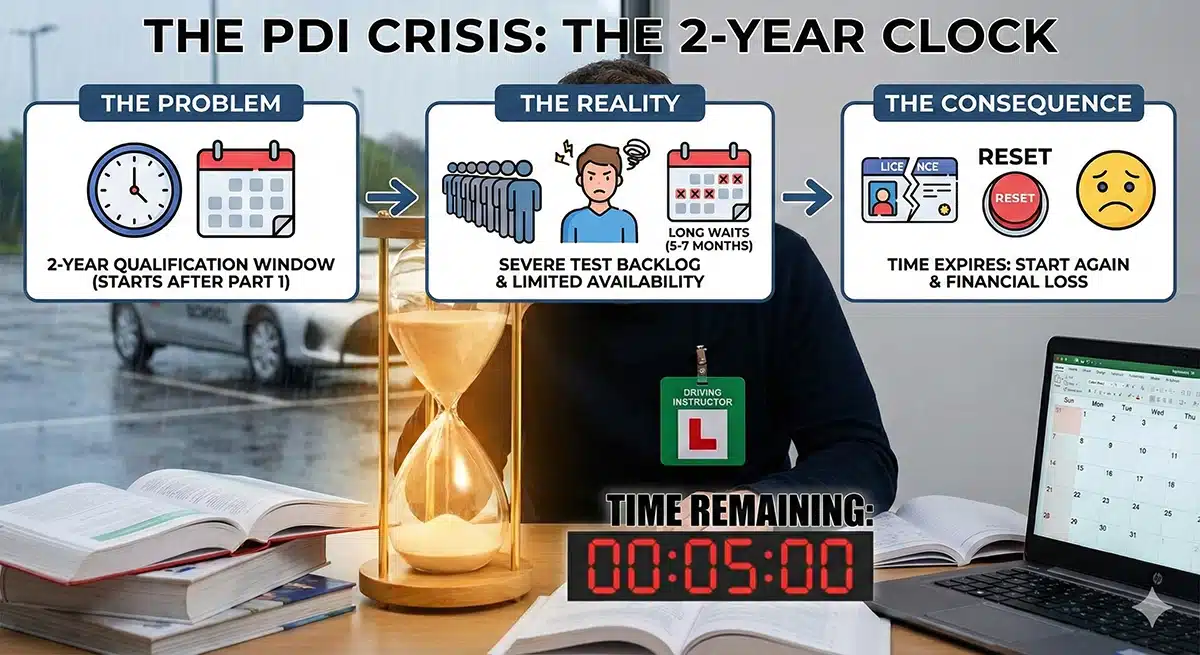
1. The Clock Ticks, Even When Tests Aren’t Available
The moment you pass your Part 1 theory test, your two-year qualification clock begins. In a functioning system, this is plenty of time. However, in the current climate, that time is being swallowed up by delays.
In many areas, PDIs are unable to book a Part 2 slot for months. Once that is passed, they face an even longer wait for Part 3. Huge chunks of the qualification period are wasted—not on training or developing skills—but simply sitting on a waiting list.
2. The “Three Attempts” Myth
Technically, DVSA rules allow you three attempts at the Part 3 instructional test. In reality, the current backlog makes using all three attempts nearly impossible.
PDIs are reporting:
- 5–7 month waits for a single test date.
- Having to travel significant distances just to find availability.
- Last-minute cancellations that reset the waiting process.
If you fail your first attempt and have to wait six months for a retake, the maths becomes brutal. There is simply no safe way to guarantee three attempts within a two-year limit. Many PDIs are timing out not because they lack the skill, but because the system cannot provide the slots.
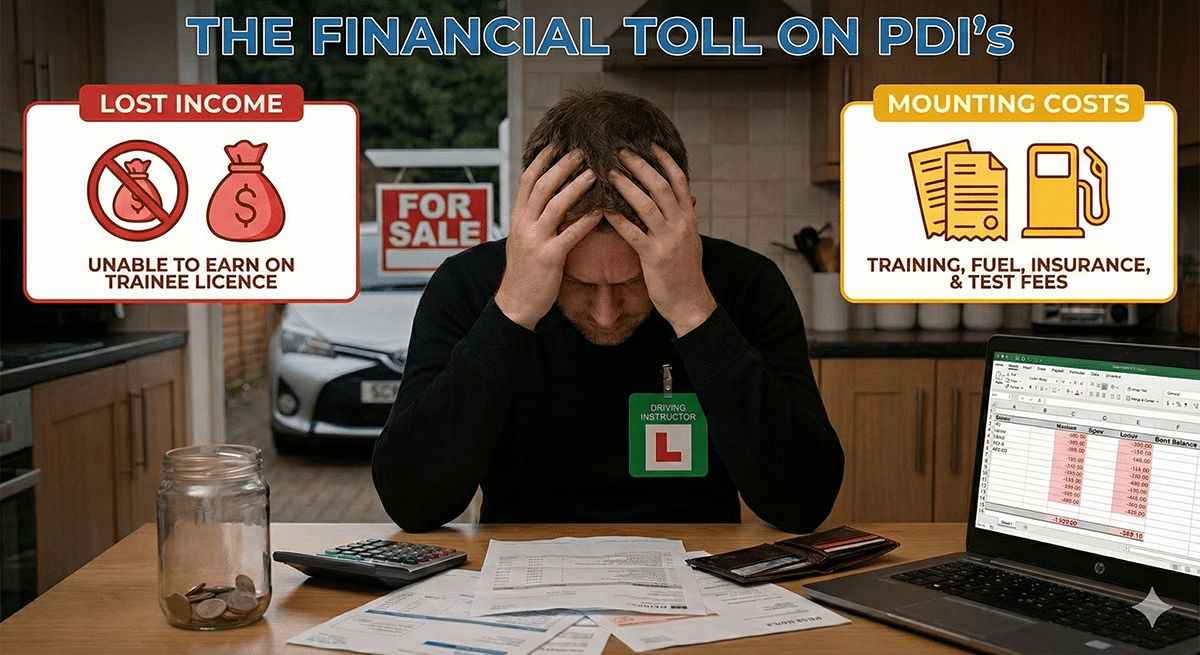
3. The Cost of “Timing Out”
If the two-year clock runs out before a PDI passes their Part 3, the consequences are devastating.
- Back to square one: Their training licence expires, and their Part 3 attempts reset.
- Retesting: They often have to retake Part 1 and Part 2.
- Financial Collapse: Their income (if on a trainee licence) stops immediately, and their training investment is lost.
This creates a high-pressure environment where a PDI isn’t just battling test nerves; they are battling a broken administrative timeline.
4. The DVSA’s Response Isn’t Enough
The DVSA is aware of the pressure on the system and has proposed various changes to tackle the backlog. However, for many PDIs currently in the system, these changes may come too late.
While there is plenty of discussion on the future landscape—you can read about how the 2026 booking changes will affect your driving test here—the core issue remains: current measures do not protect PDIs from running out of time through no fault of their own.
Currently, there is no mechanism to:
- Pause the 2-year clock during periods of excessive backlog.
- Prioritise PDIs who are nearing their expiry date.
- Offer extensions when the delay is the fault of the DVSA, not the candidate.
The Bottom Line
The two-year qualification period works on the assumption that tests are readily available. Right now, that assumption is false.
Until PDIs are guaranteed reasonable access to Part 2 and Part 3 tests, we risk losing a generation of motivated, capable instructors who are simply being timed out by a system that can’t keep up.
A Final Note of Encouragement
Even with the current challenges, there has never been a better time to become an ADI. Demand for quality instructors is high, the industry is growing, and those who qualify now enter a market rich with opportunity. But the landscape has changed, and navigating it requires the right support.
Choosing the correct trainer is more important than ever. ORDIT-registered trainers are fully up to date with the latest test standards and DVSA requirements, and they’re best placed to guide you not just in how to teach, but in how to successfully steer through the qualifying tests themselves. With the right training partner beside you, the journey becomes far clearer — and your chances of qualifying rise dramatically.
Gwyn Part 3 passed in Bangor North Wales
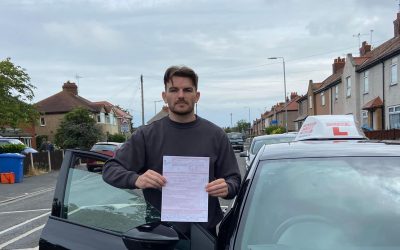
Damian Part 3 Passed First Time

Maria passed part 3
Shane Miron Part 3
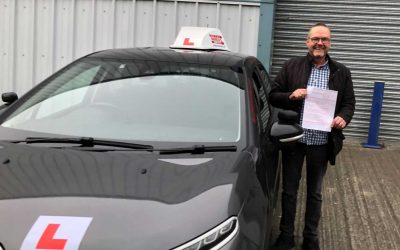
David Evans Part 3 in Bangor
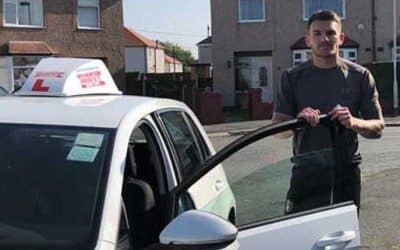
Damian passed part 2 first time

Nathan PDI Part 2
Shane passed first time

Caroline’s part 3 driving instructor test passed.